



Chief revenue officers (CROs) often talk about predictable revenue, yet few design for it. When revenue becomes unpredictable, boards do not lose confidence in the market: they lose confidence in the CRO. That distinction matters, and it is recoverable, but only through structural redesign rather than harder selling or better storytelling.
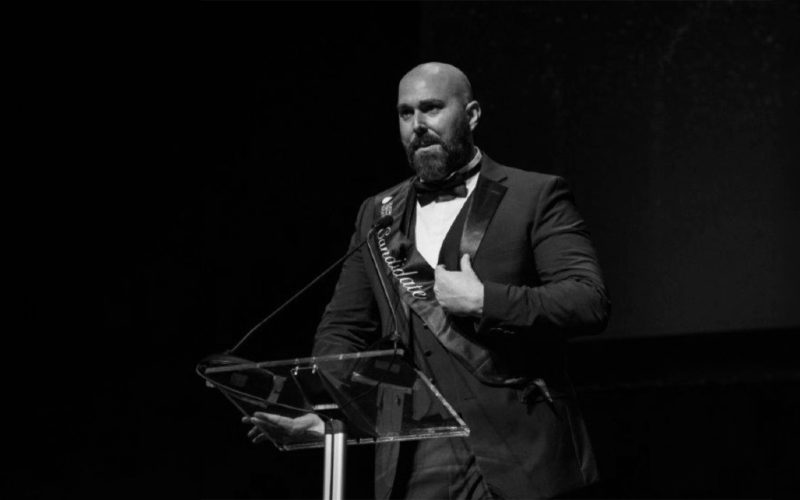
Keith Vere Fenner, a revenue operations leader with nearly three decades of global experience, has built his practice around a single conviction that most revenue organizations resist until it is too late. “Predictable revenue is not the output of harder selling,” Fenner states. “It is the output of better system design.”
Data Without a Decision Framework Is Just Noise
Most sales organizations collect significant amounts of data. Customer relationship management (CRM) systems are full of it: pipeline stages, call recordings, email sequences, opportunity values, and activity logs. The problem is that almost none of it is connected to decision-making. Data without a decision framework creates disputes over reporting hygiene, fills weekly reviews with historical information that says nothing about the future, and erodes board confidence over time.
Fenner reduces the entire question of revenue operations to three tests:
- Where will deals close, when, and at what product mix and value?
- Where are deals being lost that should be won, and why?
- Where is capital being deployed without returning value?
If the current data model cannot answer those questions on demand, it is broken, regardless of how sophisticated the CRM or how large the pipeline appears on paper. The CRO’s job is not to report history. It is to engineer outcomes, and that requires a model built around forward-looking decisions rather than backward-looking summaries.
Conversion Velocity Exposes What Conversion Rate Hides
The conversion rate tells you what happened. Conversion velocity tells you when, and the difference between those two numbers is where the structural loss is hiding. A deal that converts at 40% but takes six months is not equivalent to one that converts at 35% in eight weeks. The capital cost, the capacity cost, and the risk profile are fundamentally different. Yet most revenue operations track one and ignore the other. Velocity data requires tracking average days per stage with defined control limits, flagging slow-moving deals automatically when they exceed those limits, and attributing which activities actually accelerate conversion rather than simply generating activity.
This applies directly to the ideal customer profile (ICP) discipline as well; time spent on deals outside the ICP is time not spent on deals that close. When ICP is defined by data rather than intuition, pipeline qualification becomes a structural gate rather than a negotiation at handoff. Win rates segmented by source, industry, company size, and buying structure tell a CRO exactly where to deploy capacity and where to stop. Coverage ratios built on actual historical close rates by segment, not on the industry assumption of ‘3x’, tell them exactly how much qualified pipeline is required to hit a number.
The CRO Who Owns CAC Earns a Different Seat
The final gap that separates revenue leaders from sales leaders is ownership of customer acquisition cost (CAC). CAC by channel and segment, payback period by deal type, and lifetime value (LTV)-to-CAC ratio trend (with 3:1 as the target) are not financial metrics. They are the commercial proof that a CRO is allocating capital intelligently rather than simply chasing bookings.
Without this, the board and the private equity (PE) sponsor can see clearly what is and is not happening, even when the CRO cannot. Presenting CAC at the board level, alongside pipeline and revenue, helps CROs earn greater authority over capital allocation and shift the conversation from sales updates to commercial strategy. Predictability is not a reporting outcome. It is a design decision, made or avoided long before a forecast is ever presented. Data is not an advantage. The framework built around it is.
Follow Keith Vere Fenner on LinkedIn for more insights on revenue operations, commercial design, and building the data-led systems that deliver predictable growth.